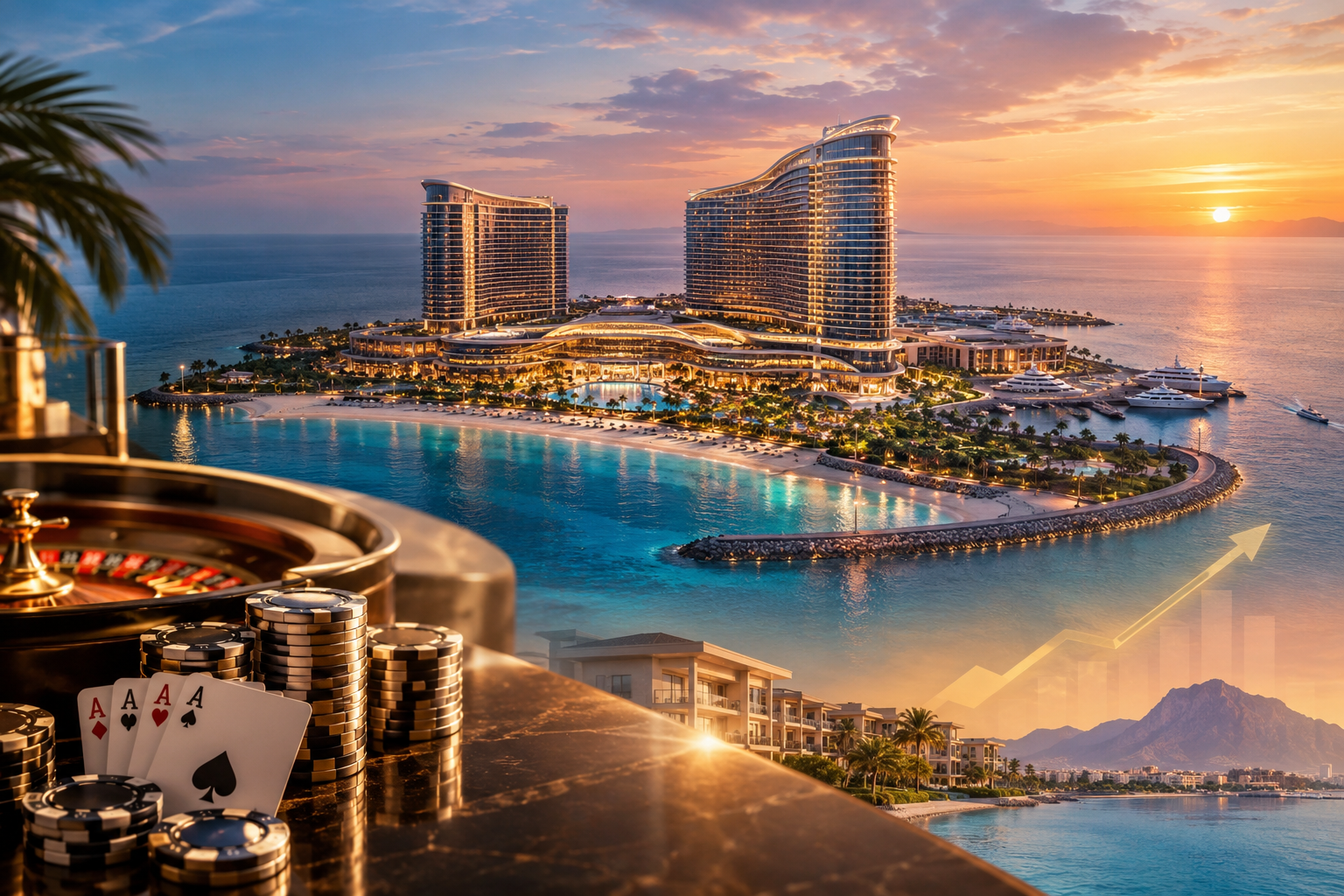
Wynn Al Marjan Island: A New Luxury Destination
Located on Al Marjan Island, Wynn Al Marjan Island represents a major addition to the UAE’s hospitality sector. The resort is planned to feature 1,530 rooms and suites, 22 restaurants, lounges and bars, a theatre, a spa, retail outlets and extensive beachfront facilities. In October 2026, the project unveiled its Wynn Marina concept, featuring 98 berths for superyachts. The marina is designed to connect waterfront arrivals with the wider resort experience, further expanding the development’s appeal beyond traditional hotel accommodation. The resort is scheduled to open in September 2027, according to Wynn Resorts. Its progress places Ras Al Khaimah among the UAE destinations developing a broader luxury tourism offering.
How Tourism Growth Could Influence Property Demand
Major hospitality developments can influence residential property markets by increasing destination awareness, supporting visitor activity and encouraging further investment in surrounding infrastructure and amenities. For Ras Al Khaimah, Wynn Al Marjan Island could strengthen interest in coastal locations such as Al Marjan Island, where residential developments increasingly combine beachfront access, resort-style facilities and hospitality services. However, the relationship between tourism growth and residential property performance is not automatic. Actual demand will depend on visitor numbers, buyer confidence, available housing supply, infrastructure development and the wider economic environment. For property buyers, the important consideration is whether a particular location and development can sustain demand beyond the initial excitement surrounding a major resort opening.
What Recent Market Data Reveals
Ras Al Khaimah’s property market has already recorded notable growth. According to CBRE Middle East research reported in September 2026, apartment sales values increased by approximately 18% year-on-year during the first half of 2026, reaching AED 2,298 per square foot. Apartment values on Al Marjan Island rose by 23.1% over the same period, while apartment rents across the emirate increased by 14.3% year-on-year. These figures provide context for the interest surrounding the Wynn development, but they should not be interpreted as evidence that the resort alone caused the increases. Market performance also reflects other developments, supply conditions and broader demand trends. As the opening date approaches, buyers should continue to assess actual transaction prices, rental comparables, service charges and the delivery timelines of individual projects.
What Property Buyers Should Consider
For buyers exploring Ras Al Khaimah, the Wynn development provides a reason to examine the emirate’s evolving property landscape more closely. Nevertheless, location selection and project fundamentals remain essential. Buyers considering off-plan properties should review the developer’s track record, construction progress, payment structure and contractual handover provisions. Those evaluating completed properties should examine current rental demand, operating costs, building management and resale liquidity. It is also important to distinguish between properties located directly on Al Marjan Island and those elsewhere in Ras Al Khaimah. Their accessibility, amenities, tenant profiles and exposure to tourism-related demand may differ significantly.
Looking Ahead to Ras Al Khaimah’s Property Market
Wynn Al Marjan Island represents more than a new resort development. Together with the emirate’s wider hospitality pipeline, it forms part of Ras Al Khaimah’s effort to strengthen its position as an international tourism destination. Its September 2027 opening will be an important milestone, but the longer-term implications for residential property will depend on how tourism demand, infrastructure, new supply and buyer activity develop over time. For international buyers, understanding these factors is more useful than relying on the announcement of a single landmark project. A careful assessment of location, pricing, ownership costs and long-term demand remains central to making informed property decisions.