
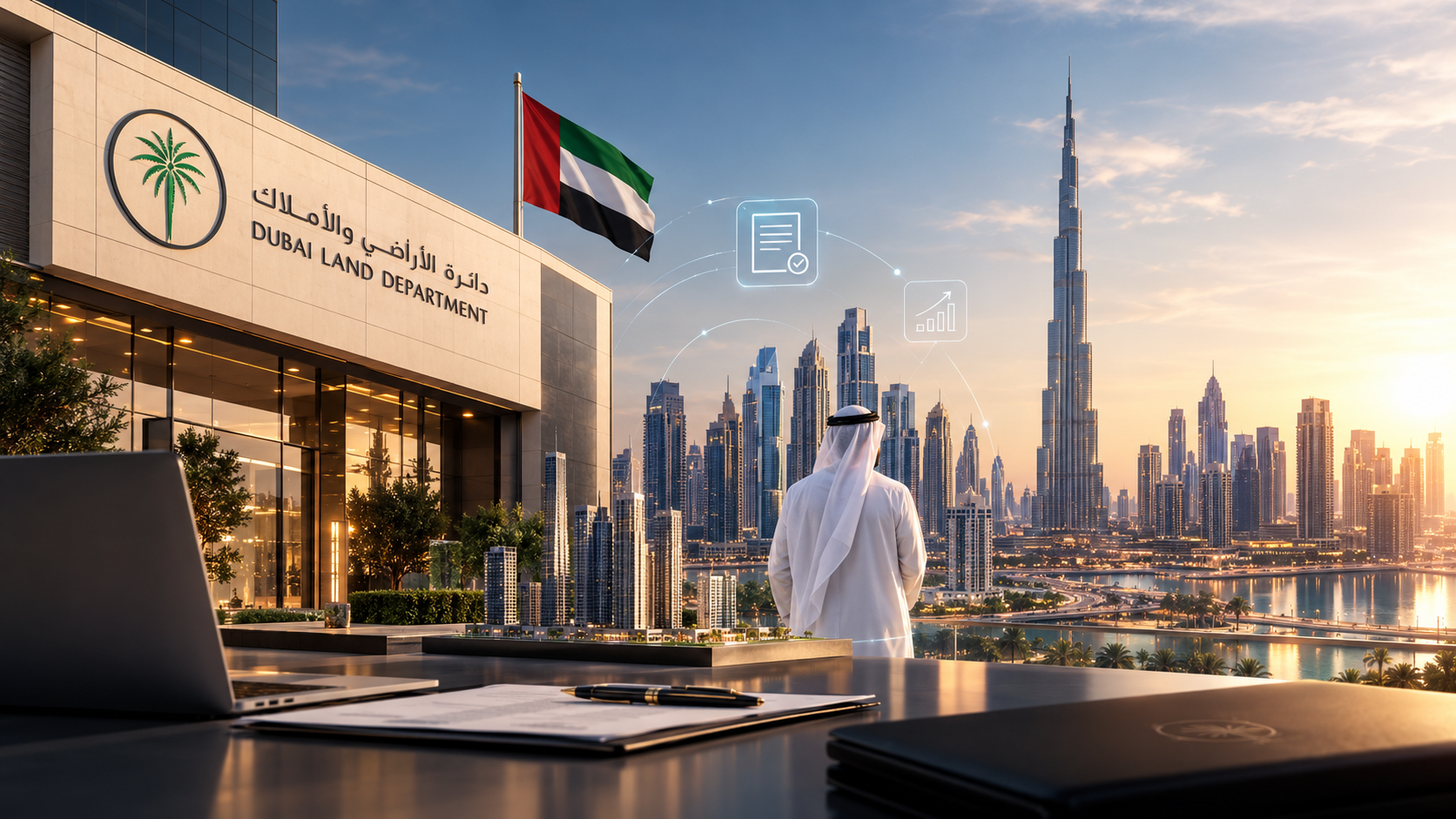
Beyond Regulation: Why DLD Matters
Most countries separate property registration, licensing, data management, and regulation across multiple agencies. Dubai has gradually consolidated many of these functions under DLD, allowing the department to operate as a central platform connecting developers, brokers, banks, investors, and government services. This centralized approach has become increasingly important as Dubai's real estate market attracts buyers from more than 180 nationalities. Instead of expanding bureaucracy, DLD has focused on reducing friction throughout the investment journey. That philosophy is embedded in the Dubai Real Estate Strategy 2033, which aims to strengthen transparency, improve market efficiency, and increase the sector's contribution to Dubai's economy through technology-driven reforms. The result is a market where institutional trust is becoming as valuable as location
From Paperwork to AI
One of DLD's biggest transformations happened quietly. For decades, property registration involved multiple manual verification steps. Documents needed to be reviewed, information entered repeatedly, and approvals processed across different stages. Today, artificial intelligence is increasingly taking over those repetitive tasks. DLD's Initial Registration platform uses AI to read passports, Emirates IDs, sales contracts, and supporting documents automatically. Instead of requiring officers to manually transfer information into government systems, the platform extracts data directly from submitted documents, reducing processing time while minimizing administrative errors. For investors, the practical benefits are significant. Rather than waiting through lengthy verification processes, transactions become faster, document consistency improves, and applicants gain greater visibility into registration status throughout the process. Perhaps more importantly, AI is being used to streamline routine work not replace legal oversight. Complex transactions still receive appropriate review, while standard cases can move much more efficiently through the system. This distinction reflects Dubai's broader approach to digital government: automation where possible, accountability where necessary.
A Digital Ecosystem Instead of Isolated Services
DLD's innovation extends beyond registration. Over the past few years, it has built interconnected digital services designed to make property ownership more transparent from the very beginning. Among the most notable platforms is Dubai REST, which allows property owners and investors to access government property services digitally instead of relying solely on in-person processes. Another initiative enables public access to live transaction data, allowing market participants to monitor real estate activity with unprecedented visibility. Meanwhile, the Madmoun verification system introduces QR-code authentication for property advertisements, helping buyers distinguish legitimate listings from misleading promotions. Together, these services create something relatively uncommon in global real estate markets: a government-backed digital ecosystem where verification, ownership records, and transaction information increasingly exist within connected platforms rather than isolated databases. For overseas buyers particularly first-time investors this added transparency can significantly reduce uncertainty before committing capital.
Why Trust Has Become Dubai's Hidden Asset
Luxury towers attract attention. Institutional trust attracts capital. This is perhaps DLD's greatest contribution to Dubai's real estate market. International investors don't simply evaluate rental yields or payment plans. They also assess whether ownership rights are protected, transactions are verifiable, regulations are predictable, and administrative processes are reliable. By investing heavily in digital infrastructure, Dubai has strengthened confidence across those areas. Instead of making transparency an abstract policy goal, DLD has translated it into practical tools investors can actually use from document automation and transaction tracking to verified property listings. In a global environment where cross-border investment often involves legal complexity and information gaps, reducing uncertainty becomes a competitive advantage.
A Different Model of Government Innovation
What makes DLD particularly interesting isn't that it has adopted technology. Many governments are digitizing services. The difference is that Dubai appears to be designing government as market infrastructure. Rather than positioning regulation as a brake on growth, DLD increasingly functions as an enabler—building systems that allow developers to launch projects more efficiently, brokers to operate within clearer rules, and investors to complete transactions with greater confidence. It's an approach that aligns with Dubai's broader ambition to become one of the world's most technologically advanced investment destinations. As artificial intelligence becomes embedded in property registration, blockchain continues expanding ownership possibilities, and digital verification becomes standard practice, DLD is quietly redefining what a modern property authority can be. The next phase of Dubai's real estate story may not be written by another record-breaking skyscraper. It may be written by the digital infrastructure that makes every future transaction faster, smarter, and more trusted.