What Makes Dubai a Smart City?
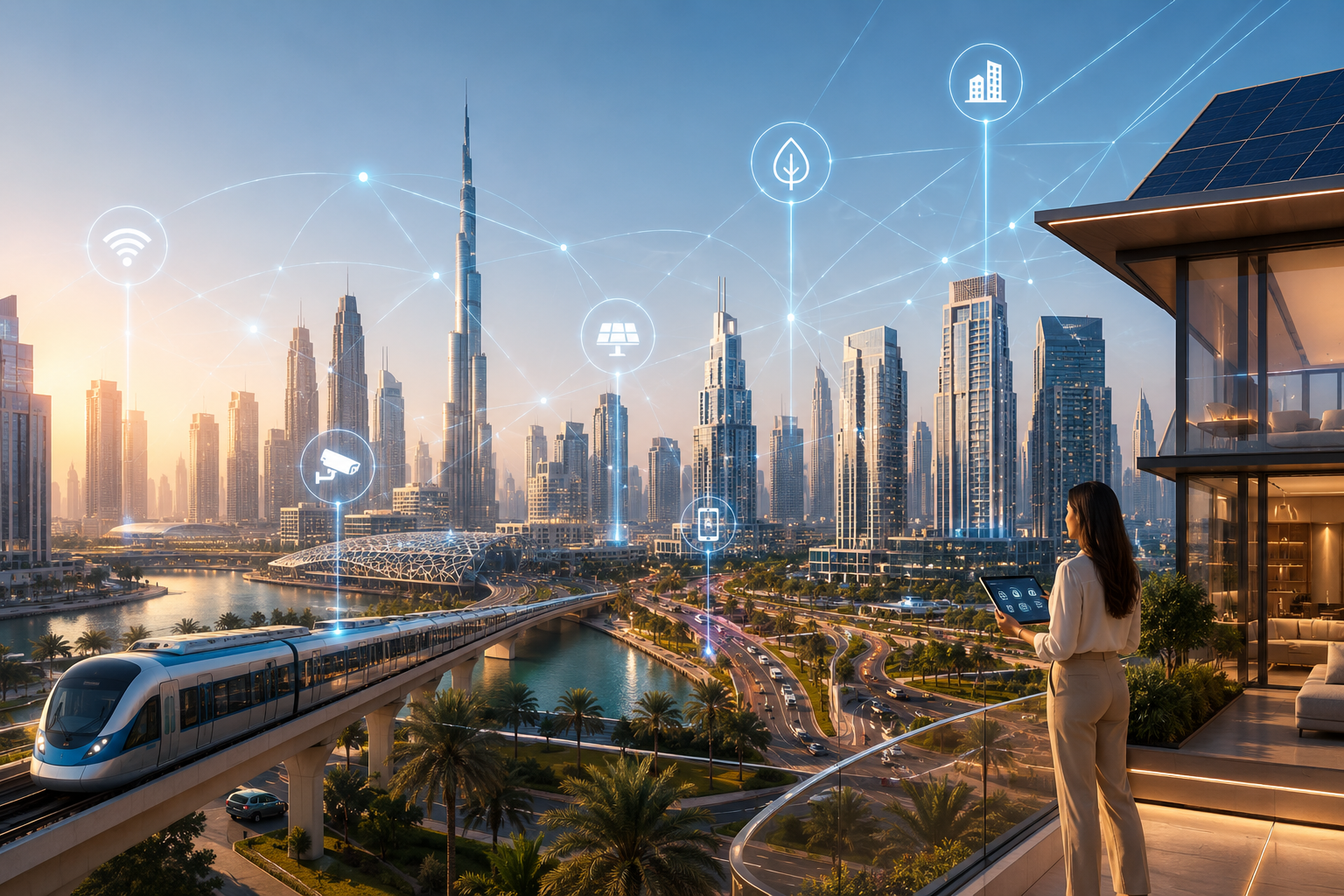
A smart city uses digital technology to improve how people live, work, and move around the city. Dubai has invested heavily in AI-powered government services, digital property transactions through the Dubai Land Department, intelligent traffic management, modern public transportation systems, and sustainable building standards that are integrated into new developments. Instead of focusing solely on innovation for its own sake, these initiatives are designed to make daily life more efficient while strengthening Dubai's appeal to residents, businesses, and international investors.
Why Technology Can Increase Property Value
Technology does not automatically make a property more expensive, but it strengthens many of the factors that typically support long-term value.
Better Connectivity Creates Stronger Demand
One of the biggest advantages of smart infrastructure is improved connectivity. Dubai continues investing in intelligent transportation systems that help reduce travel time and create easier access between residential, commercial, and leisure districts. As neighborhoods become more connected, they often become more attractive to both residents and businesses, increasing their long-term appeal.
A Better Living Experience Attracts Residents
Technology also improves everyday convenience. Features such as smart parking, digital payment systems, connected community facilities, and more efficient public services contribute to a smoother living experience. These improvements make communities more desirable for homeowners while also supporting rental demand from tenants looking for convenience alongside quality living.
Technology Encourages Business Growth
Dubai's ambition to become a global hub for technology and innovation extends beyond infrastructure. As more technology companies establish operations in the city, demand for housing naturally grows around business districts and emerging commercial hubs. This relationship between employment growth and residential demand is one of the reasons infrastructure investments can have lasting effects on the property market.
AI Is Becoming Part of Dubai's Real Estate Ecosystem
Artificial intelligence is increasingly shaping how Dubai's property market operates. Buyers can now experience faster digital verification processes, online property registration, improved transaction transparency, and more efficient administrative procedures. At the same time, AI supports smarter urban planning by helping government agencies manage future city development more effectively. These improvements are designed to create a smoother experience for buyers, developers, and public institutions alike.
Smart Communities Are Gaining More Attention
Several newer communities are being planned with technology and sustainability built into their foundations rather than added later. Areas such as Dubai South , Expo City Dubai , and Dubai Hills Estate are examples of master-planned developments that combine residential neighborhoods with offices, schools, parks, and retail facilities within integrated communities. Instead of relying only on iconic architecture, these developments are designed around everyday livability and long-term urban growth.
Sustainability Is Becoming Part of Smart Development
Dubai's smart city vision is closely connected with sustainability. Many newer developments incorporate energy-efficient lighting, intelligent water management systems, green building standards, and environmental monitoring technologies that help improve operational efficiency. As sustainability becomes a greater consideration for international buyers, these features may contribute to stronger long-term demand for well-designed properties.
What This Means for International Investors
Technology should never be the only reason to purchase a property, but it can become an important indicator when evaluating long-term potential. Rather than focusing only on today's rental yield, investors may benefit from considering whether a community forms part of Dubai's long-term infrastructure strategy, whether future connectivity will improve over the next five to ten years, and whether the area is attracting both businesses and new residents. Looking at these broader factors helps shift investment decisions away from short-term market fluctuations and toward sustainable urban growth.
The Bigger Picture
Dubai's real estate story is no longer defined only by luxury architecture. It is increasingly shaped by how technology supports the entire city—from digital government services to AI-powered infrastructure and smarter communities. For long-term investors, understanding where these innovations are being implemented provides valuable context when evaluating future opportunities. As Dubai continues expanding its smart city vision, the relationship between technology, infrastructure, and property value is likely to become even more significant in the years ahead.