Dubai’s Growing Population and Construction Demand
Dubai’s population reached approximately 4.58 million by the end of 2025, representing annual growth of 7.5%. Meanwhile, Dubai Municipality issued 10,776 building permits in the first quarter of 2026, an increase of 12% compared with the same period in 2025. These figures highlight the scale of Dubai’s ongoing urban development. While housing needs vary across different market segments, sustained population growth makes construction efficiency increasingly important. For the luxury property sector, the challenge extends beyond building more homes. Developers must also deliver distinctive designs, quality finishes, and residential environments that meet the expectations of premium buyers.
Robotic Construction: Dubai’s Next Building Innovation
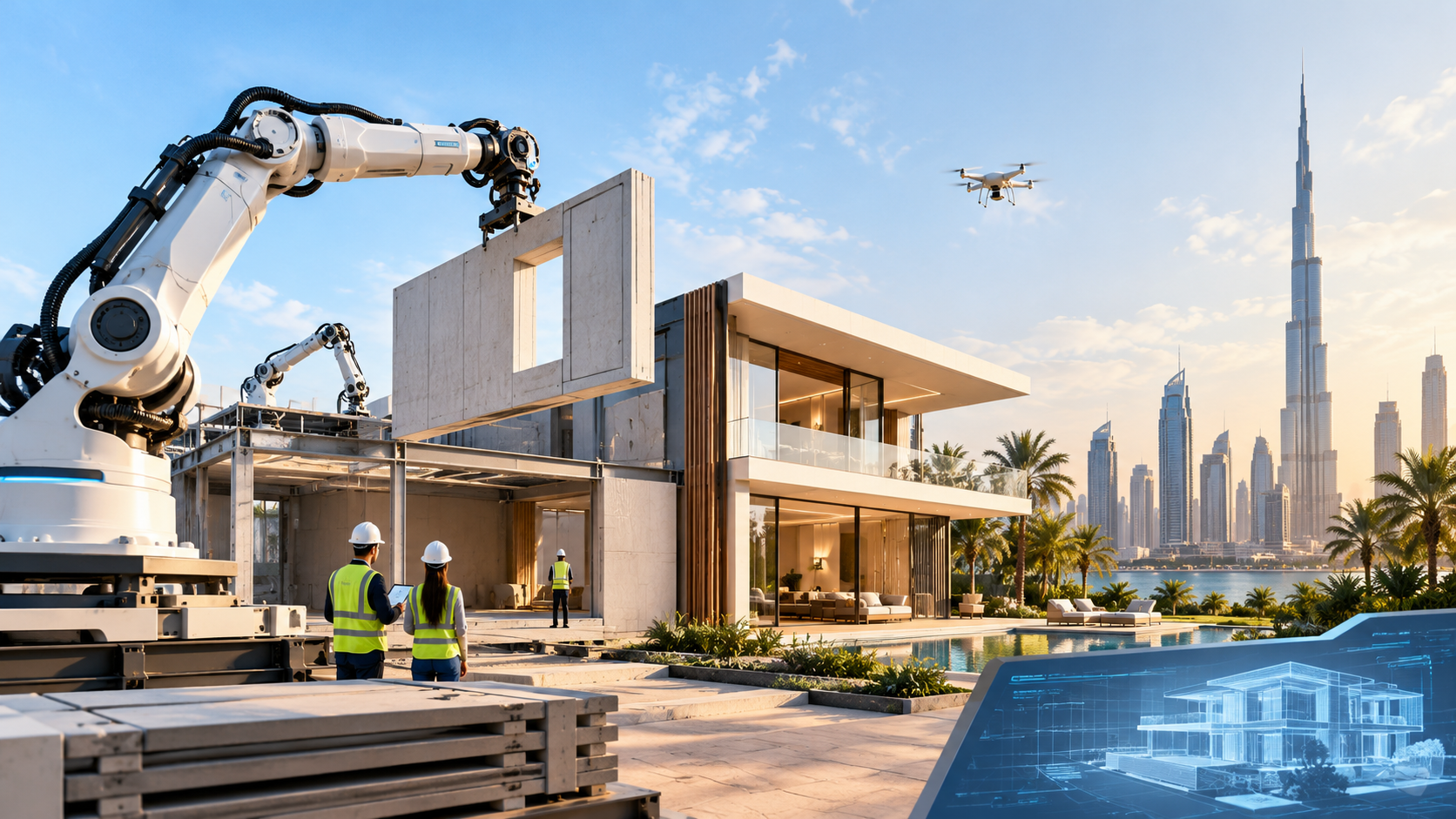
In January 2026, Dubai Municipality launched a global challenge to develop a residential villa built entirely using robotic construction systems. The initiative involves a consortium of more than 25 advanced technology companies and academic institutions. Dubai Municipality also introduced the 70–70 Strategy for 2030 in collaboration with Sobha Realty. The strategy aims to shift 70% of construction activities to off-site manufacturing while achieving at least 70% automation within factories. These initiatives demonstrate Dubai’s ambition to integrate advanced technology into the construction industry. Rather than relying exclusively on conventional building methods, the city is exploring new approaches that could improve productivity, precision, and consistency.
How Technology Could Transform Luxury Homes
Robotic construction and factory-based manufacturing could offer several advantages for luxury residential developments. Greater construction precision. Automated processes may help improve consistency in components and repetitive building tasks, supporting more controlled construction quality. Improved project efficiency. Moving selected activities into factory environments could make production less dependent on on-site conditions and help streamline project schedules. More consistent quality control. Standardised manufacturing processes may reduce variations in certain building components, although final quality still depends on materials, design, installation, and supervision. For luxury homes, these benefits could help developers manage complex projects while maintaining high standards. However, bespoke architectural details and premium finishes will continue to require careful design coordination and skilled craftsmanship.
What This Means for Dubai’s Luxury Property Market
As Dubai continues to expand, the ability to deliver quality residential developments efficiently could become an increasingly important competitive advantage. Technology may help developers respond to housing needs while exploring new approaches to design, sustainability, and construction management. For buyers, the long-term benefit could be more consistent building processes and potentially improved project delivery. However, robotic construction does not automatically translate into lower property prices, faster completion, or higher investment returns. These outcomes depend on implementation costs, regulatory requirements, project complexity, and market conditions. The impact on luxury housing demand will also depend on factors beyond construction technology, including location, lifestyle preferences, accessibility, and the availability of suitable properties.
Looking Ahead: The Future of Luxury Homes in Dubai
Dubai’s investment in construction technology reflects a broader ambition to develop a smarter and more efficient urban environment. As robotic systems, automation, and digital tools continue to evolve, their role in residential development is worth watching. For the luxury property sector, the opportunity is not simply to build homes faster. It is to explore how innovation can support better construction processes while preserving the design, quality, and living experience that premium buyers expect. As these initiatives progress, technology could become an increasingly influential part of how Dubai builds its next generation of luxury residences.