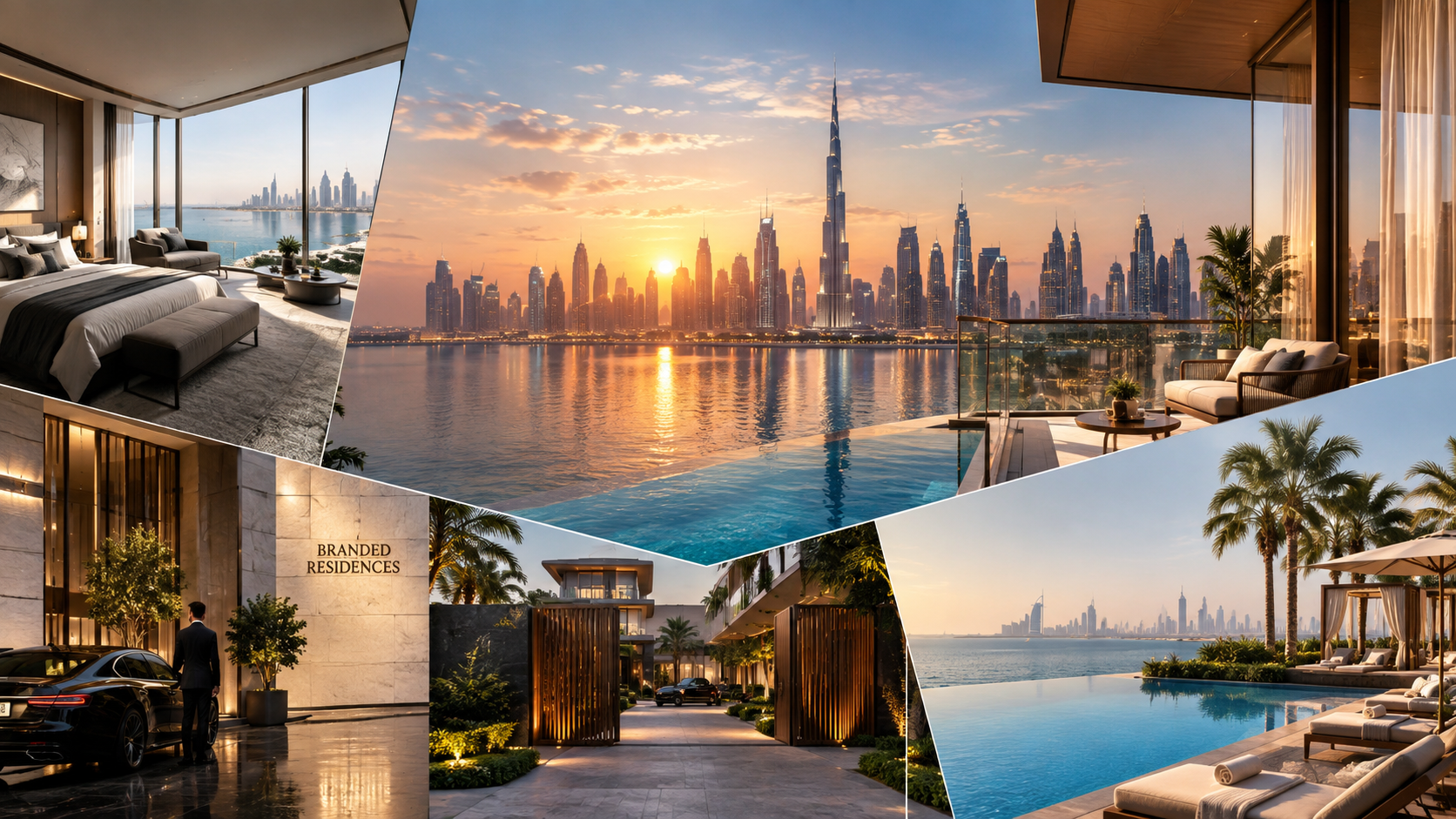

Dubai's luxury property market has evolved beyond the traditional distinction between apartments and villas. Today, investors can choose between branded residences, which combine residential ownership with internationally recognized brands and hospitality-style services, and prime new-build properties, which focus on location, architecture, design, and modern residential living. Both can offer strong investment potential, but they appeal to different types of buyers. So, when comparing branded residences vs prime new builds in Dubai, which one makes more sense for investors? The answer depends on what you value most: brand recognition and services, location and property fundamentals, rental demand, capital appreciation, or long-term positioning.
What Is a Branded Residence?
A branded residence is a residential property developed in partnership with a recognized luxury, hospitality, fashion, automotive, or lifestyle brand. Unlike a conventional apartment, a branded residence typically combines residential ownership with elements associated with a luxury hotel or lifestyle brand. Depending on the project, this may include concierge services, premium amenities, housekeeping or hospitality services, branded interiors and finishes, dedicated resident facilities, and enhanced service standards. Dubai has become one of the world's most active markets for branded residences, with projects ranging from hospitality brands to luxury fashion and automotive partnerships. However, not every branded residence offers exactly the same level of service. Investors should look beyond the brand name and understand what the partnership actually provides.
What Is a Prime New-Build Property?
A prime new-build property is a newly developed or newly launched property positioned in a desirable location and aimed at the premium or luxury segment. Unlike a branded residence, a prime new build does not necessarily rely on an international brand. Its value proposition can instead come from its location, architecture, design, developer reputation, quality of construction, views, limited supply, amenities, and modern layouts. For investors, this means the property can compete strongly on its underlying fundamentals rather than relying primarily on brand recognition.
Branded Residences vs Prime New Builds
Key Differences at a Glance
- Brand recognition — Branded residences typically have stronger brand recognition
- Hospitality services — Branded residences often include hotel-inspired services
- Entry price — Branded residences may carry a brand premium
- Location — Both depend heavily on location quality
- Rental potential — Driven by demand, pricing and property positioning
- Capital appreciation — Depends on location, supply, developer and market conditions
- Investment focus — Branded residences emphasize brand and lifestyle; prime new builds emphasize property fundamentals
1. Brand Recognition and Resale Appeal
One of the strongest advantages of a branded residence is recognition. A buyer looking at a residence associated with a globally recognized hospitality, fashion, or luxury brand may immediately understand the property's positioning. This can create differentiation in a market where many residential developments compete for the same buyers. However, brand recognition alone does not guarantee capital appreciation. For resale, investors should also consider location, unit layout, views, floor level, service charges, building quality, developer reputation, and future competing supply. A prime new build in an exceptional location can therefore outperform a branded residence in a weaker location. Location still matters.
2. Rental Demand and Rental Potential
Rental performance is another important consideration. Branded residences can appeal to tenants looking for a premium lifestyle and hotel-inspired services. This may help a well-positioned project attract a specific segment of Dubai's rental market. Prime new builds can also perform strongly, especially when they are located near business districts, metro stations, waterfront destinations, major attractions, established residential communities, or new infrastructure and growth corridors. However, investors should not assume that a branded residence automatically produces a higher rental yield. A higher purchase price and higher service charges can affect the final return. The better approach is to compare annual rental income against the total acquisition cost rather than simply looking at the property's headline rental rate.
3. Capital Appreciation
Capital appreciation depends on several factors, and the brand is only one of them. For both branded residences and prime new builds, investors should evaluate location, developer reputation, supply, property quality, infrastructure, and underlying demand. For branded residences, the strength and relevance of the brand can add another layer of differentiation. However, it is risky to assume that all branded residences will appreciate faster than other new-build or luxury properties. The individual project, its pricing, location, and market conditions still matter.
4. Entry Price
Branded residences generally position themselves toward the premium end of the market. Part of the price can reflect brand licensing, interior design, premium materials, hospitality services, amenities, and overall project positioning. This can create a price premium compared with a comparable non-branded property. But investors should ask an important question: Is the premium justified by the additional value the property provides? A prime new build may offer a more attractive entry price while still providing excellent architecture, amenities, location, and developer quality. For investors who prioritize value and capital efficiency, this can make a prime new build more attractive.
5. Lifestyle vs Investment Fundamentals
A branded residence is often designed to deliver both investment and lifestyle. The buyer is not simply purchasing a property. They are also buying a particular experience, service standard, and brand positioning. A prime new build may place greater emphasis on location, design, developer quality, and underlying property fundamentals. Neither approach is inherently better. The right choice depends on the investor's objectives, budget, and preferred investment strategy.
Which Is Better for Investors?
Which Property Type Fits Your Investment Strategy?
- 1Branded residences may suit investors who:
- 2Value international brand recognition
- 3Want premium lifestyle positioning
- 4Prefer hotel-inspired services
- 5Target the luxury rental market
- 6Want a highly differentiated property
- 7Are comfortable with a higher entry price
- 8Plan to hold the property for the long term
- 9
- 10
- 11Prime new builds may suit investors who:
- 12Prioritize location and property fundamentals
- 13Want greater flexibility in their budget
- 14Focus on capital appreciation potential
- 15Want exposure to emerging growth areas
- 16Prefer established developers without paying a brand premium
- 17Want to optimize their entry price
What Should You Check Before Buying?
Whether you choose a branded residence or prime new build, don't evaluate the property based only on its marketing. Investors should consider the developer's track record, location, service charges, rental demand, payment plan, surrounding supply, and potential exit strategy. For off-plan properties, it is also important to understand how much capital is required during construction and at handover. Ultimately, the investment should be evaluated based on the complete financial picture rather than the property's branding alone.
Branded Residence or Prime New Build?
There is no universal winner between branded residences and prime new builds. A branded residence can offer an additional layer of value through brand recognition, hospitality services, premium amenities, and lifestyle positioning. A prime new build, meanwhile, can offer strong investment potential without necessarily carrying the same brand premium, particularly when the project benefits from an excellent location, reputable developer, limited supply, and strong underlying demand. For investors, the smarter approach is not simply to ask, "Is it branded?" Instead, ask: "What am I paying for, and will the market continue to value it when I sell or rent the property?" In Dubai's competitive real estate market, brand, location, developer quality, supply, rental demand, service charges, and entry price should all be considered together. The right investment is ultimately the property that best matches your budget, investment horizon, and return objectives.